Field notes · 7 min read
How to Design a Commercial Wall Wrap That Actually Works
The same wall, the same printer, the same install crew - and one wrap looks like a million bucks while the other looks like a vinyl sticker. Design is the difference.
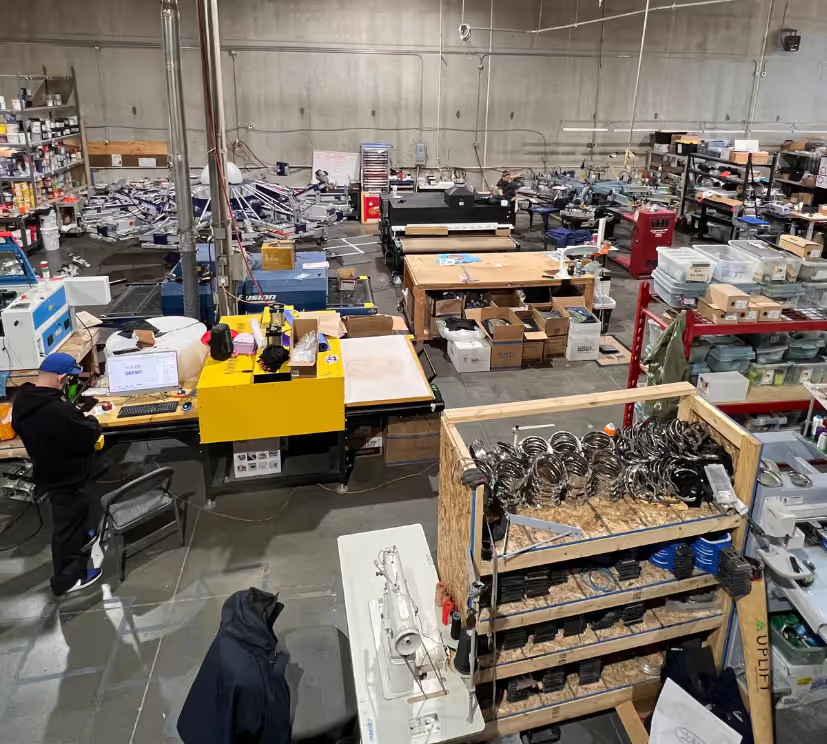
We've installed more bad wraps than we'd like to admit - wraps where the artwork was supplied by a client or their agency and the print and install were technically perfect but the result was, frankly, not. The technical execution was right. The design wasn't. Great wall wraps share a small handful of design principles. Get these right and a $1,500 wall will out-impress a $50,000 build-out.
Design for the viewing distance
The single biggest mistake in wall-wrap design is treating it like a billboard. Wall wraps are read at 3–10 feet, not 100 feet. That changes everything: type can (and should) be smaller; image detail matters; rough textures and gritty effects look great instead of like print artifacts. The rule we give designers: design as if it's a high-end print magazine spread, not a highway billboard.
Use one focal point, not seven
Walls are vertical real estate, but they're not catalogs. The best wall wraps have one focal area - a hero image, a piece of typography, a singular gesture - and let the rest of the wall breathe. Cramming three logos, two taglines, a QR code, and four images into a single wrap is what makes it look cheap.
Resolution matters more than you think
Print resolution should be 100–150 dpi at the final printed size. For a 10x10 ft wall, that means your image needs to be at least 12,000 pixels wide. Most stock photography from a quick Google search will not hold up. We can upres in some cases, but starting with high-resolution source material is the difference between sharp and blurry. Vector art (logos, illustrations) scales infinitely and is always the right answer if available. Photographs need to be sourced at scale.
Bleed, safe zone, and the wall plan
Always design with bleed (extra image extending past the wrap edge) and a safe zone (no critical elements within 2–4 inches of the edge). Walls are rarely perfectly square; outlets, switches, and trim eat into your design. Plan the wrap on a photo of the actual wall, with all obstructions marked, before finalizing artwork.
Color: print, then approve
Color on a screen is not color on a wall. Always print a small physical proof - even a 12x12 inch sample - on the actual material before approving full production. We do this on every commercial wrap. It catches color drift, material interaction, and lighting issues that no monitor will show you.
"Design as if it's a high-end print magazine spread, not a highway billboard."
Terms used in this article
More from Commercial Wall Wraps in Las Vegas
More commercial wall wraps guides
More from Solid · Commercial Wall Wraps in Las Vegas
More to explore
Related services
- Commercial fleet wrapsCars, trucks, vans & full fleets. 3M/Avery certified, 5–7 yr warranty.
- Large-format printingBanners, backdrops, signage up to 5m wide.
- Commercial building wrapsWall, floor, window, elevator & column wraps. Measured and installed in-house.
- EmbroideryCaps, polos, jackets - Pantone-locked stitch.
Industries we serve
Local coverage
Got a commercial wall wraps project in mind?
We'll help you scope it, price it, and ship it on time.
Get a quote