Guide · Large Format
What Is Large Format Printing?
Large format printing is a digital printing process for producing graphics too big for a standard office printer: banners, posters, wall and building wraps, window graphics, vehicle graphics and trade show displays. It is defined by the equipment and media width, not by one fixed print size. Pieces are printed on rolls of vinyl, mesh, paper or fabric, or directly onto rigid boards, then finished and installed.
This guide explains what counts as large format, how the process works, which printing technologies and materials are used, and what affects cost. When you are ready to price a project, see our large format printing services in Las Vegas.
What Does Large Format Printing Mean?
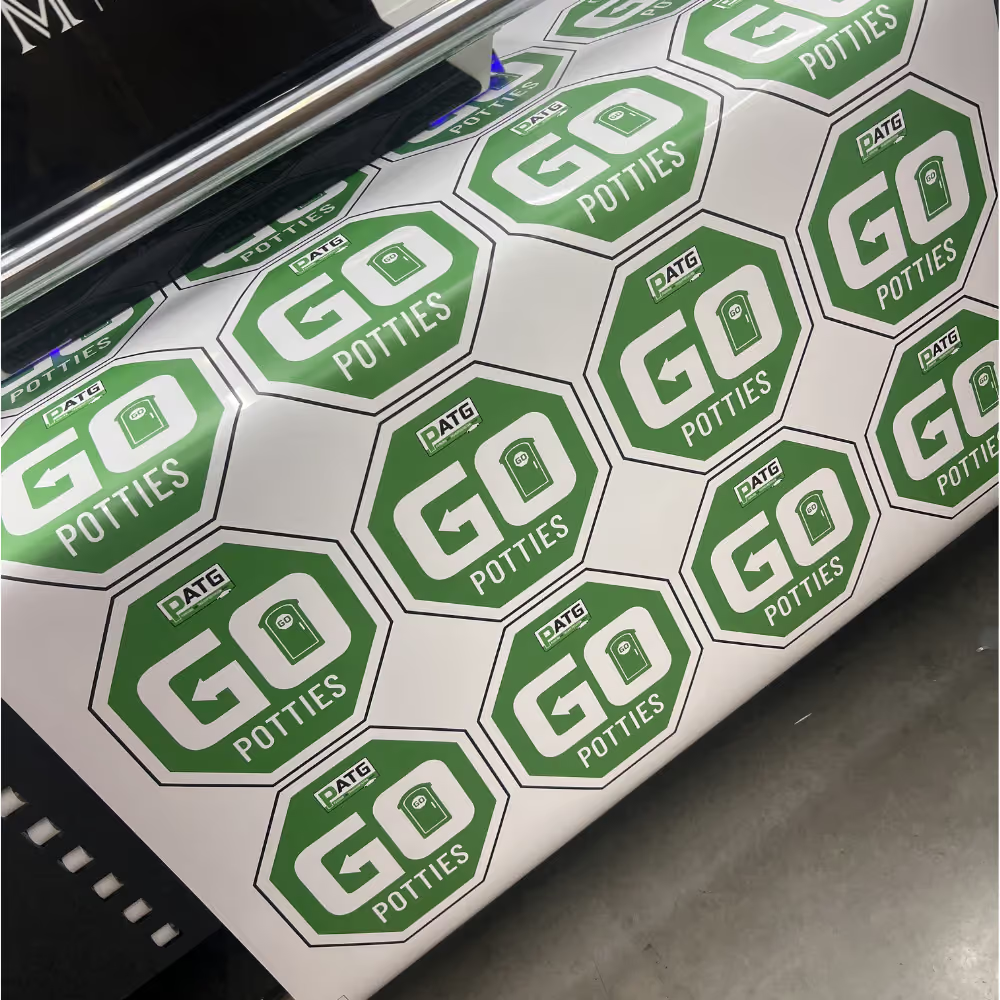
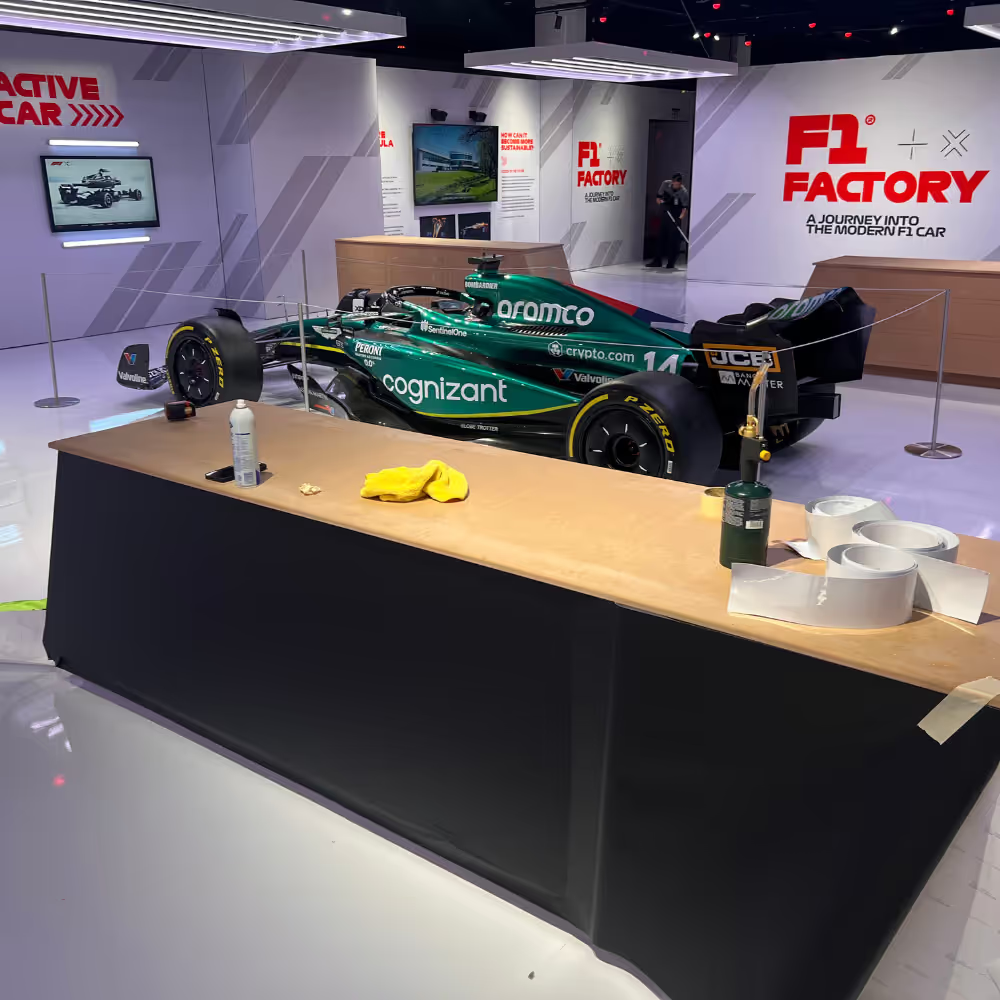
Large format printing covers any print too large for a desktop or office printer, produced on dedicated wide-format equipment. The category is about the machine and the media, so it includes a 24 x 36 inch poster as well as a graphic that covers the side of a building. The same category of equipment produces a retail window graphic and a convention backdrop; what changes is the material, the ink technology, the finishing and how the piece is installed.
For the side-by-side comparison with office and offset printing, read Large Format vs. Standard Printing, or see the glossary entry What is large format printing?.
What Size Is Considered Large Format?
Large format printing generally starts at around 24 inches on one side. Anything wider than a standard desktop or office printer can produce is typically printed on large format equipment, and the category is defined by printer and media width rather than one fixed print size. That is why a 24 x 36 inch poster counts as large format, and so does a building-sized graphic produced in panels.
Very large graphics, such as wall murals, building wraps and event backdrops, are usually printed in sections and joined at installation. If you are not sure whether your project fits, send us the dimensions and where it will hang, and we will confirm how we would produce it.
How Does Large Format Printing Work?
Large format work follows the same path from file to finished piece, whatever the product:
Artwork and file prep.
The file is built at the finished size, with bleed and enough resolution for the viewing distance.
Proofing.
A digital proof shows the size, layout and finishing before anything prints.
Printing.
The printer lays ink onto the media, either roll-fed for flexible materials such as vinyl, mesh and fabric, or flatbed for rigid boards.
Drying or curing.
Heat or UV light cures the ink, depending on the ink type, so the print is stable to handle.
Finishing.
Trimming, hems and grommets, lamination, mounting on rigid boards or contour cutting.
Delivery and installation.
Pickup, delivery, or installation on a wall, window, fence or building.
File requirements are covered in How to Prepare Files for Large Format Printing and the glossary entry DPI explained.
Types of Large Format Printing Technology
Large format printers use different ink and curing technologies. The right one depends on the material, where the graphic will be displayed and how long it needs to last.
| Technology | How it works | Typically used for |
|---|---|---|
| UV | UV-curable inks are cured instantly under UV light; prints on rolls and on rigid boards | Rigid signs, posters, durable indoor and outdoor graphics |
| Latex | Water-based latex inks are cured with heat | Banners, wall graphics, vehicle and window graphics |
| Solvent | Solvent-based inks bond to vinyl and resist weather | Outdoor banners, vinyl graphics, long-term outdoor signage |
| Aqueous | Water-based inks | Photo-quality posters and indoor prints |
| Dye-sublimation | Heat transfers dye into polyester fabric | Fabric displays, backdrops, flags |
You do not need to pick the technology yourself. Tell a print shop where the graphic will live and for how long, and it will choose the process and material to match.
What Materials Are Used in Large Format Printing?
The right material depends on where the graphic will live and how long it needs to last. Flexible media such as vinyl and mesh suit banners and wraps, and mesh lets wind pass through for outdoor use. SEG fabric suits tension displays and backdrops. Rigid boards such as foam board, coroplast, acrylic and dibond suit signs, with foam board for indoor use and coroplast for temporary outdoor use. Magnetic sheeting suits vehicle graphics. See the materials we work with.
Large Format Printing Services in Las Vegas
Each product has its own page with sizes, materials and ordering details.
Banners
Vinyl, mesh, fabric and retractable banners for storefronts, fences, job sites and events.
Posters
Large-format posters for lobbies, promotions and event wayfinding.
Rigid Signs
Coroplast and foam board signs for directionals, job sites and booth panels.
Yard Signs
Bulk custom yard signs on 4 mm coroplast.
Wall and Building Wraps
Interior wall graphics and exterior building wraps, with installation available for applicable jobs.
Window Graphics
Storefront and interior window graphics, including perforated window film.
Trade Show Graphics
Booth graphics, backdrops and step-and-repeat displays for Las Vegas conventions.
Factors That Affect Large Format Printing Cost
Large prints use more media and ink, specialty materials cost more than standard ones, and finishing and installation add labor. The main factors are:
- Size: total square footage, plus any seams or panels.
- Material: vinyl, mesh, fabric and rigid boards are priced differently.
- Quantity: larger runs spread setup across more pieces.
- Finishing: hems, grommets, lamination, mounting and contour cutting.
- Installation: scoped and priced separately from printing.
- Turnaround: rush and same-day work typically costs more.
- Artwork: print-ready files avoid design and prepress time.
Stock banner, poster and rigid sign sizes have published prices on their product pages, and custom sizes, wraps and installed work are quoted. For the full breakdown, read How Much Does Large Format Printing Cost?
How to Prepare Files for Large Format Printing
- Build the file at the finished size, or at a clean fraction of it (such as 25%) with the scale noted.
- Use vector artwork for logos and text so they stay sharp at any size.
- Use images with enough resolution for the viewing distance; a graphic seen from across a hall needs less than a poster read up close.
- Add bleed so trimming and finishing do not leave white edges.
- Convert or embed fonts, and send a print-ready PDF or AI file.
Read the full guide, How to Prepare Files for Large Format Printing, and the terms DPI explained and Vector vs. raster.
Field notes
Guides from our Las Vegas shop
Large Format vs. Standard Printing: What's the Difference?
Different equipment, different substrates, different pricing. Here's the actual line between standard and large format.
What Can You Actually Print at Large Format? (Full Guide)
If it's bigger than a piece of paper and printed, it's large format. Here's the full catalog.
How to Prepare Files for Large Format Printing
Resolution, color mode, bleed, fonts, scale. Get these five right and your file prints clean the first time.
How Much Does Large Format Printing Cost?
Real numbers, not 'depends'. Here's what large format actually costs and why.
Building Wraps 101: What They Are and When to Use One
Oversized exterior graphics on the side of a building. High impact, real engineering, real permitting. Here's the playbook.
Glossary
Terms worth knowing
Frequently asked questions
- Is a 24 x 36 inch print considered large format?
- Yes, usually. A 24 x 36 inch poster is larger than a standard office printer can produce, so it is typically printed on large format equipment. Large format is defined by the printer and media width rather than one fixed print size, so the term also covers banners, wraps and building-sized graphics.
- What is the difference between large format and wide format printing?
- The two terms are often used interchangeably. Some printers use wide format for equipment up to roughly 100 inches wide and grand format for larger machines, but the common idea is printing that is too big for a standard office printer.
- What does large format printing cost?
- Cost depends on size, material, quantity, finishing, installation and turnaround. Stock banner, poster and rigid sign sizes have published prices on their product pages, and custom sizes, wraps and installed work are quoted from your dimensions and use case.
- Why is large format printing so expensive?
- Large prints use more media and ink, run on specialized equipment, and often need finishing such as hems, lamination or mounting. Installation and rush turnaround add cost as well. Choosing the right material for the application and sending print-ready files are the easiest ways to keep a project efficient.
- How long does a large format job take?
- Production time is counted from proof approval, not from the day you order. Stock banners and posters run 3 to 5 business days after proof approval, and same-day pickup is available on eligible orders when approved artwork is in by 11am. Wraps, fabricated pieces and large projects are scheduled individually, with a production estimate in the quote.
- Do you handle installation?
- Installation is available for applicable wraps, graphics, signage and displays. Production and installation are scheduled separately, and installation is quoted per job.
- Can I supply my own files?
- Yes. Send print-ready PDF, AI or PSD files at full scale, or at 25% with the scale specified. We run a prepress check and flag any issues before production.